Introduction
Good healthcare is not only about having hospitals, doctors, medicines, and health services nearby. It is also about whether people understand when they need care, where to find it, what questions to ask, how to understand health information, and how to make informed decisions for themselves and their families. This is where health literacy becomes important. Health literacy is the ability to find, understand, evaluate, and use health information and services in ways that support better health and well-being. The World Health Organization recognizes health literacy as an important determinant of health and emphasizes that people need access to trustworthy, understandable, and actionable health information.
For communities facing limited healthcare access, language barriers, low awareness, or misinformation, health literacy can be especially important. At BXI Foundation, we believe that empowering people with the right health knowledge can help communities become more confident, informed, and capable of making better health decisions.
What Is Health Literacy?
Health literacy is more than simply being able to read a health pamphlet or understand a doctor’s prescription. It involves being able to:
- Find reliable health information
- Understand what that information means
- Ask questions when something is unclear
- Recognize trustworthy sources
- Understand when professional healthcare is needed
- Make informed health decisions
- Use healthcare services appropriately
- Communicate health concerns clearly
WHO explains that health literacy involves accessing, understanding, appraising, and using information and services to promote and maintain good health.
In simple terms:
Health literacy helps people turn information into informed action.
Why Health Literacy Matters in Communities
Healthcare systems can be difficult to navigate. People may encounter unfamiliar medical terms, complicated instructions, online information, different treatment options, or conflicting advice. For someone with limited health literacy, even a simple healthcare decision can become confusing. This can affect whether a person seeks care, understands medical advice, follows a treatment plan, or knows where to find reliable information. WHO identifies health literacy as a determinant of health and notes that differences in education, income, language, poverty, and access to resources can contribute to inequalities in health literacy. Improving health literacy can therefore be part of creating a more equitable healthcare environment.
Health Information Is Everywhere—But Is It Always Reliable?
Today, people can find health information within seconds. Search engines, social media, messaging applications, videos, blogs, and online communities have made health information more accessible than ever. But greater access does not automatically mean better information.
People can encounter:
- Misleading health claims
- Unverified remedies
- Outdated information
- Misunderstood medical advice
- Sensationalized health content
- Information without reliable sources
This creates a new challenge. Communities need not only access to information, but also the ability to evaluate it. Health literacy helps people pause and ask:
- Who published this information?
- Is the source trustworthy?
- Is the information supported by evidence?
- Does it apply to my situation?
- Should I speak to a qualified healthcare professional?
These questions can help people navigate an increasingly complex information environment.
The Connection Between Health Literacy and Early Care
People cannot always recognize when a health concern requires professional attention. A symptom may be ignored because someone believes it will disappear on its own. Another person may rely on advice from an unreliable source. Someone else may not know which healthcare service to approach. Health literacy can help people understand the importance of seeking appropriate care and asking questions when they are uncertain.
This does not mean diagnosing illnesses independently. Instead, it means helping people understand when professional advice may be necessary and how to communicate effectively with healthcare providers.
Understanding Medical Information
Healthcare often comes with unfamiliar words and instructions. Terms used by healthcare professionals may not always be easy for everyone to understand. A person may leave a consultation knowing that they have been given instructions but still be uncertain about what those instructions actually mean. Good communication matters.
Healthcare professionals, organizations, and community programs can make information easier to understand by:
- Using simple language
- Explaining unfamiliar terms
- Encouraging questions
- Providing information in relevant local languages
- Using visual and practical examples
- Checking whether people have understood important instructions
Health literacy is therefore not only an individual responsibility. WHO emphasizes that health systems and organizations also have a role in creating environments where people can access and understand appropriate health information.
Why Health Literacy Is Important for Families
Health decisions are rarely made by individuals alone. Parents make decisions for children. Adult children may support elderly family members. Families may discuss treatment options, nutrition, healthcare costs, and when to seek medical attention. This means that improving the health literacy of one person can potentially benefit an entire household. A parent who understands the importance of reliable health information may be better positioned to guide their children. A young adult who knows how to evaluate health information can help family members avoid misleading claims. A community volunteer who understands how to communicate health information clearly can share that knowledge with others. Health knowledge can travel from one person to another.
Health Literacy and Underserved Communities
Health information is not equally accessible to everyone. People living in underserved or remote communities may face additional challenges such as limited healthcare facilities, transportation difficulties, language barriers, low digital access, or a lack of trusted health information. These challenges can make it harder to navigate healthcare systems. WHO notes that health literacy inequalities can be connected with broader social and economic inequalities. This is why community-based health education can play an important role.
Information becomes more useful when it is:
- Accessible
- Understandable
- Relevant
- Trusted
- Actionable
The Role of Community Health Education
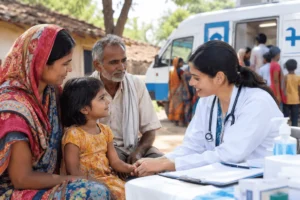
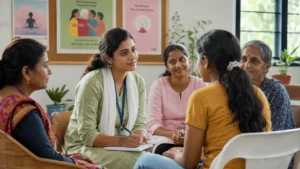
Health education does not have to happen only inside hospitals. Community centers, schools, local organizations, health camps, outreach programs, and awareness sessions can all create opportunities for people to learn about health.
Community-based health education can help people understand:
- Where to seek healthcare
- How to identify reliable health information
- Why regular healthcare conversations matter
- How to communicate concerns with healthcare professionals
- Where to find trustworthy resources
- Why professional medical advice should be prioritized over unverified claims
The Government of India’s Central Health Education Bureau also identifies health education and health promotion as important areas of public health work.
Health Literacy Is About Empowerment, Not Fear
Health awareness should not make people anxious. Its purpose should be to help people feel more informed and confident. Good health communication does not tell people to fear every symptom or believe every warning. Instead, it helps people understand their options, recognize reliable information, ask appropriate questions, and seek professional support when needed. Empowerment comes from understanding. When people know where to look, what questions to ask, and whom to trust, they can participate more actively in their own healthcare.
How NGOs Can Help Improve Health Literacy
Non-governmental organizations can help bridge the gap between healthcare information and communities. NGOs working at the grassroots level can understand local needs and communicate information in ways that are easier for people to relate to.
This may include:
- Community awareness sessions
- Health education workshops
- Information materials in local languages
- Healthcare camps
- Digital health awareness
- Family education
- Guidance on accessing available services
- Collaboration with healthcare professionals
The goal is not to replace doctors or healthcare systems. It is to help people better understand and navigate them.
How BXI Foundation Supports Healthcare Awareness
At BXI Foundation, we believe that healthcare becomes more meaningful when people have the knowledge and confidence to participate in their own well-being. Our healthcare-focused efforts aim to support communities through awareness, outreach, health education, and initiatives designed around real community needs. We believe that information should not remain limited to healthcare institutions. It should reach families and communities in ways they can understand and use. By encouraging health awareness and informed decision-making, we aim to contribute to communities that are better prepared to understand their health needs and seek appropriate support.
What Individuals Can Do to Improve Their Health Literacy
Improving health literacy can begin with simple habits. Before acting on health information, consider:
Check the source
Prefer information from trusted healthcare organizations, qualified professionals, government health agencies, and established medical institutions.
Ask questions
If something is unclear during a healthcare consultation, ask for an explanation.
Avoid relying on social media alone
A widely shared post is not necessarily accurate or appropriate for your situation.
Compare information
When health information seems surprising or contradictory, check multiple reliable sources.
Understand before acting
Do not make important healthcare decisions based only on information that you do not fully understand.
Seek professional guidance
Online information can provide general education, but it cannot replace personalized advice from a qualified healthcare professional.
Building Health-Literate Communities
A health-literate community is not one where everyone knows every medical term. It is a community where people can find trustworthy information, understand it, ask questions, make informed decisions, and access appropriate services.
- That requires cooperation.
- Families have a role.
- Healthcare professionals have a role.
- Schools have a role.
- NGOs have a role.
- Governments and health systems have a role.
When these groups work together, health information can become more accessible and meaningful.
Conclusion
Healthcare is not only about treating illness. It is also about helping people understand their health and participate in decisions that affect their lives. Health literacy gives people the ability to find, understand, evaluate, and use health information more effectively. For underserved communities, this knowledge can be especially valuable.
At BXI Foundation, we believe that informed communities are stronger communities. By supporting health education, awareness, and access to trustworthy information, we can help people become more confident participants in their own healthcare. Because better healthcare does not begin only when someone enters a hospital.
It begins when people have the knowledge to understand their health, the confidence to ask questions, and the support to make informed choices.