

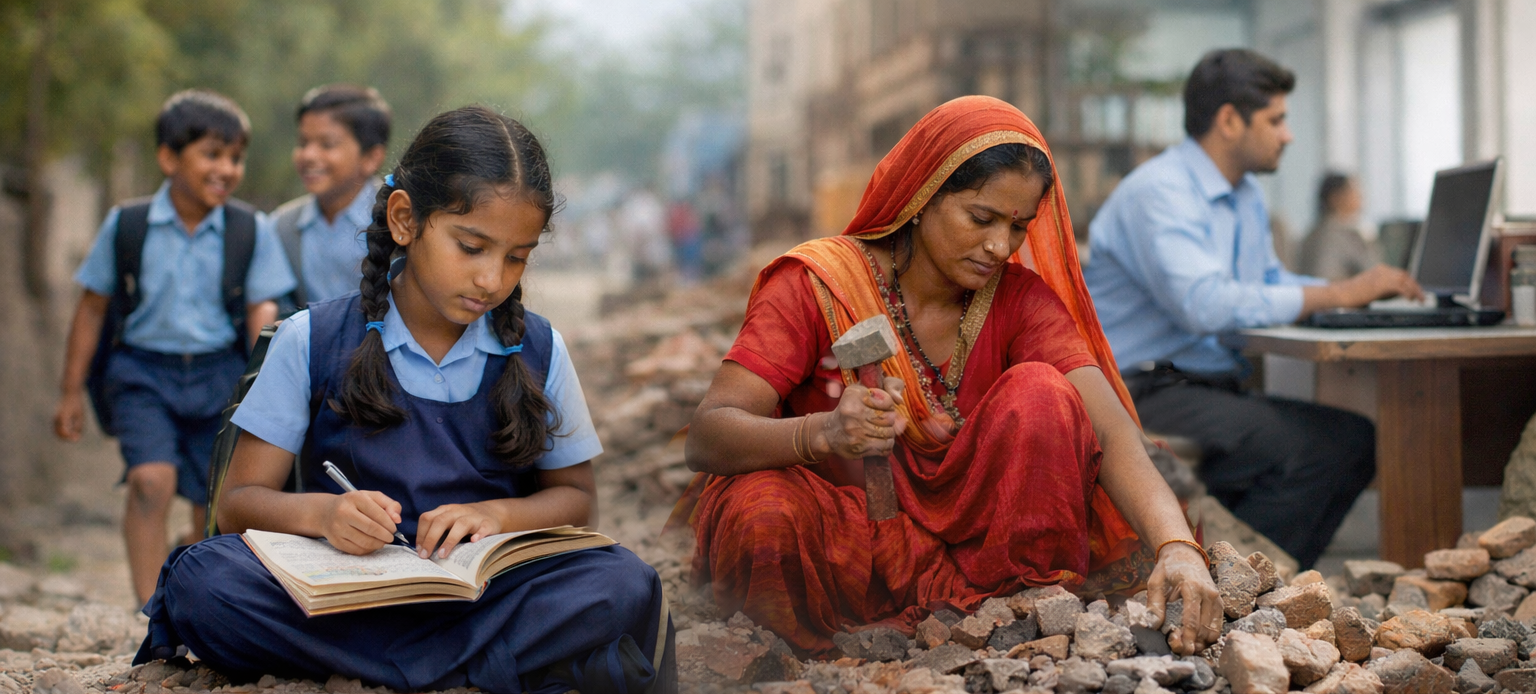
Gender inequality in India affects millions of lives every single day. You see it when a girl drops out of school early. You see it when a woman earns less for the same work. You see it when families invest more in sons than daughters.
Even today, gender inequality in India limits education, freedom, safety, and opportunity, especially for women and girls in rural and tribal areas. Let’s understand why gender inequality exists in India, how education plays a role, where India stands globally, and what you can do to help change it.
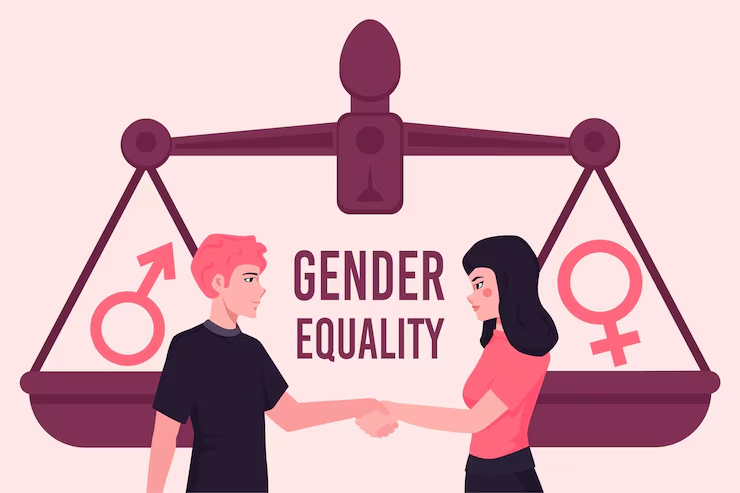
What Does Gender Inequality in India Really Mean?
Gender inequality means treating people differently simply because of their gender. In India, this inequality often works against women and girls.
You notice it when:
- Girls stop going to school earlier than boys.
- Women handle most household work without recognition.
- Men dominate decision-making at home and at work.
- Safety concerns limit women’s freedom.
Gender inequality in present-day India is not hidden. It exists in homes, schools, offices, and communities.
The History of Gender Inequality in India
Gender inequality in India did not begin today. It developed over centuries. Traditional customs placed women in dependent roles. Practices like child marriage, dowry, and limited access to education became common. Over time, society accepted these norms as “normal.” Even though laws have changed, many old beliefs still influence how families raise girls today. History continues to shape the present.
Gender Inequality in Present India: What’s Still Going Wrong?
Today, you see progress but you also see deep gaps.
Women lead companies, win medals, and succeed in science and politics. Yet many girls still struggle to complete school. Many women still hesitate to step outside unsafe environments.
Gender inequality in present-day India shows up as:
- Fewer women in the workforce
- Unequal pay
- Early marriage
- Limited access to education in rural areas
- Violence and safety concerns
The reality changes slowly, but the struggle continues.
What Is India’s Rank in the Gender Inequality Index?
You might ask: What is the rank of India in the Gender Inequality Index?
India ranks low on the global Gender Inequality Index. This ranking reflects gaps in women’s health, education, empowerment, and workforce participation.
India’s rank in the Gender Inequality Index does not reflect a lack of ability. It reflects a lack of access and opportunity. When women receive equal chances, outcomes improve.
Causes of Gender Inequality in India
- Patriarchal Mindset Society often expects men to lead and women to follow. These beliefs limit choices from childhood.
- Son Preference Many families still value sons more than daughters. This affects education, nutrition, and care.
- Gender Inequality in Education in India Girls often drop out of school due to distance, safety, household duties, or early marriage.
- Economic Dependence Without a stable income, women lose decision-making power.
- Social Restrictions and Fear Safety concerns stop women from studying, working, or travelling freely. These reasons for gender inequality in India reinforce each other across generations.
Gender Inequality and Education in India: Why Education Matters Most
- Poor school infrastructure
- Lack of female teachers
- Long travel distances
- Family pressure to leave school early
Types of Gender Inequality in India
- Educational inequality – fewer learning opportunities for girls
- Economic inequality – wage gaps and job limits
- Health inequality – poor nutrition and healthcare access
- Political inequality – low female representation
- Social inequality – restricted freedom and choice
Gender Inequality in India: Essay Viewpoint
If you were to write about gender inequality in India, one truth would stand out:
A country cannot grow when half its population remains unequal.
True development happens only when women and men receive equal respect, rights, and opportunities.
Images of Gender Inequality in India You See Every Day
- Girls are fetching water instead of going to school.
- Women working unpaid at home.
- Early marriages end childhood.
- Few women in leadership roles.
How to Overcome Gender Inequality in India
- Support Girls’ Education Encourage schooling, scholarships, and safe classrooms.
- Create Equal Job Opportunities Support fair wages and skill development for women.
- Change Mindsets at Home Teach boys and girls equality from childhood.
- Enforce Strong Laws Protect women through strict legal action and awareness.
- Be an Ally Gender equality needs men and women working together.
The Role of Communities and NGOs
- Educate first-generation girls
- Prevent early marriage
- Improve health and confidence.
- Shift community thinking
Conclusion: Why Gender Equality Matters to You
Gender inequality in India affects everyone. It slows growth, limits talent, and holds society back.
When you educate a girl, support a woman, or challenge unfair norms, you help build a stronger India.
Gender equality is not a women’s issue. It is a human issue, and you are part of the solution.
Frequently Asked Questions (FAQs)
What is gender inequality?
What is gender inequality in India?
What is the rank of India in the Gender Inequality Index?
What are the causes of gender inequality in India?
- Patriarchal social norms
- Preference for male children
- Limited access to education for girls
- Economic dependence of women
- Safety concerns and social restrictions
How to overcome gender inequality in India?
You can overcome gender inequality in India by:
- Supporting girls’ education
- Encouraging equal job opportunities and pay
- Changing mindsets at home and in communities
- Enforcing laws that protect women
- Involving men and boys in promoting equality
Long-term change starts with awareness and action.
How to reduce gender inequality in India?
To reduce gender inequality in India:
- Ensure equal education for girls and boys
- Improve women’s access to healthcare and nutrition
- Promote women’s financial independence
- Create safe public spaces
- Support community and NGO initiatives
Every small step contributes to lasting change.
Donate & save tax s
Your support writes their future — see how one click can open countless classroom doors. Read More
Help someone get the care they deserve — discover how your kindness brings healing closer. Read More
Help someone get the care they deserve — discover how your kindness brings healing closer. Read More