Introduction
Education does not end when the school bell rings. For children, true education is also about learning how to communicate, solve problems, make decisions, work with others, and face challenges with confidence. These skills help children not only succeed in school but also prepare them for everyday life.
For many children, especially those growing up with limited opportunities, developing these skills can make a meaningful difference in their future. At BXI Foundation, we believe that education should help children become knowledgeable, confident, responsible, and capable individuals.
What Are Life Skills?
Life skills are the abilities that help children manage everyday situations and make thoughtful decisions.
Some important life skills include:
- Communication
- Problem-solving
- Decision-making
- Teamwork
- Time management
- Self-confidence
- Emotional awareness
- Adaptability
These skills develop gradually through education, experience, encouragement, and interaction with others.
Why Life Skills Matter for Children
Academic knowledge is important, but children also need practical skills to apply what they learn.
Life skills can help children:
- Communicate With Confidence
Being able to express thoughts, ask questions, and listen to others helps children build healthy relationships and participate actively in learning.
- Solve Everyday Problems
Children encounter challenges at school, at home, and in their communities. Learning how to think through problems can help them find constructive solutions.
- Make Better Decisions
Education can teach children to understand choices, consider consequences, and make responsible decisions.
- Work With Others
Teamwork teaches children how to respect different opinions, share responsibilities, and achieve common goals.
- Handle Challenges
Life does not always go according to plan. Developing resilience and adaptability can help children respond positively when they face difficulties.
Education Should Prepare Children for Life
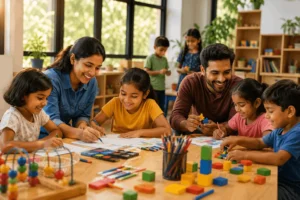
A classroom can teach mathematics, science, languages, and other subjects. But learning can also happen through activities, discussions, sports, creative projects, and community experiences.
- For example, a group activity can teach teamwork.
- A presentation can build communication skills.
- A creative project can encourage problem-solving.
- A sports activity can teach discipline and cooperation.
When children are given opportunities to learn in different ways, education becomes more meaningful.
The Role of Parents and Teachers
Children learn life skills through everyday experiences as much as through formal lessons.
Parents and teachers can support this development by:
- Encouraging children to ask questions
- Allowing them to make age-appropriate choices
- Listening to their ideas
- Teaching them how to handle mistakes
- Encouraging teamwork
- Recognizing effort rather than only results
- Creating a safe environment for learning
When children feel comfortable making mistakes and trying again, they can develop greater confidence.
Creating Opportunities Beyond Books
Not every child has access to extracurricular activities, technology, learning materials, or supportive educational environments. This is why community support can play an important role.
Providing children with opportunities to participate in:
- Reading activities
- Sports
- Art and creativity
- Group learning
- Digital learning
- Skill-development activities
can help them discover interests and abilities that may otherwise remain unexplored.
How BXI Foundation Supports Children’s Development
At BXI Foundation, our focus goes beyond education as a classroom experience. We believe children need opportunities that support their overall growth and development.
Through our efforts, we aim to encourage children to:
- Learn with confidence
- Develop practical skills
- Explore their interests
- Express themselves
- Build positive relationships
- Prepare for future opportunities
By supporting the whole child, we can help create stronger foundations for the future.
How You Can Help a Child Learn and Grow
Supporting a child’s development does not always require a large contribution.
You can make a difference by:
- Donating educational materials
- Volunteering your time
- Mentoring children
- Supporting skill-development programs
- Encouraging children to read and learn
- Supporting organizations working for children’s education
Sometimes, giving a child the opportunity to try something new can help them discover a talent they never knew they had.
Conclusion
Education is not only about what children learn from textbooks. It is also about helping them develop the confidence, skills, and values they need to navigate life. When children learn how to communicate, think critically, solve problems, work with others, and face challenges, they become better prepared for the opportunities ahead.
At BXI Foundation, we believe that every child deserves an education that prepares them not only for exams, but for life. Because education gives children knowledge, but life skills give them the confidence to use it.