Introduction
How communities can help children turn education into confidence, practical skills and lifelong opportunity A school can open the door to education. But what happens after the school day ends can matter just as much. For many children, learning continues at home, in libraries, community spaces, playgrounds, conversations and everyday experiences. These moments help children connect what they learn in school with the world around them. Yet access to these opportunities is not equal.
Some children grow up with books, computers, supportive adults, extracurricular activities and quiet spaces to study. Others may return home to environments where educational resources are limited and responsibilities leave little time for additional learning. This difference is one reason education beyond the classroom matters.
Education should not be limited to textbooks, examinations and school hours. Children also need opportunities to explore their interests, develop practical skills, ask questions, solve problems and discover what they are capable of.
What Does Education Beyond the Classroom Mean?
Education beyond the classroom refers to learning experiences that complement formal schooling.
It can include:
- Reading and library activities
- Community learning programmes
- Sports and creative activities
- Digital learning
- Art, music and storytelling
- Practical problem-solving
- Mentorship
- Career exposure
- Volunteering and community participation
- Life and communication skills
These experiences do not replace school education. They extend it.
A child who learns about environmental science in school might understand the subject differently after participating in a local cleanliness or tree-planting activity. A student learning mathematics might discover its practical value while managing a simple budget. A child studying communication can develop confidence by participating in a group discussion or storytelling session. Learning becomes more meaningful when children can connect knowledge with real life.
Why Classroom Learning Alone Is Not Enough
Schools play a central role in children’s education. Teachers provide structured learning, curriculum and academic guidance. But education has a wider purpose.
Children also need to develop the ability to:
- Communicate clearly
- Work with others
- Make decisions
- Think critically
- Solve everyday problems
- Adapt to new situations
- Understand different perspectives
- Take responsibility
- Learn independently
These abilities are developed through experience as well as instruction. A child may know the definition of teamwork from a textbook.
Working on a project with other children teaches them what teamwork actually feels like. That difference is important. Knowledge becomes more powerful when children learn how to use it.
Community Learning Can Reach Children Who Need It Most
Educational inequality does not end when a child enters school. Children from low-income or underserved communities may continue to face barriers outside the classroom.
They may have limited access to:
- Books
- Internet connectivity
- Computers
- Educational activities
- Private tutoring
- Mentorship
- Safe study spaces
- Career guidance
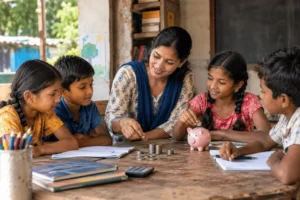
Community-based education programmes can help reduce some of these gaps. A small learning centre, library, computer lab or after-school programme can provide children with opportunities that may not otherwise be available to them. The objective is not to create another classroom. It is to create more pathways for learning.
Libraries Can Become More Than Places for Books
A community library can be a powerful educational space. It can give children access to stories, reference materials and subjects beyond their school curriculum. But a library can also become a place where children:
- Discuss books
- Complete homework
- Attend storytelling sessions
- Explore new subjects
- Use educational technology
- Meet mentors
- Develop independent study habits
For a child who does not have a quiet place to study at home, a welcoming community learning space can make a meaningful difference. Sometimes, improving education does not require building something complicated. It can begin with a safe place, useful resources and someone willing to guide a child.
Mentorship Can Change How Children See Their Future
Children often need more than information. They need people who can help them see possibilities. A mentor can listen to a student’s interests, encourage questions, share experiences and help them understand different educational or career pathways.
For children who are the first in their families to pursue certain educational opportunities, this kind of guidance can be especially valuable. A mentor does not need to have all the answers.
Practical Learning Builds Confidence
Children gain confidence when they are given opportunities to do things—not simply memorise them. Consider a child participating in a simple community project. They may need to plan an activity, divide responsibilities, speak to others and solve unexpected problems. The child is learning several skills at once. They are practising communication. They are making decisions. They are working as part of a team. They are learning from mistakes. Most importantly, they are discovering that they can contribute. This is one of the strengths of experiential learning. Children remember experiences differently when they have actively participated in them.
Digital Learning Can Expand Educational Opportunities
Technology has changed how children access information. Online educational resources can provide lessons, tutorials, books, educational videos and opportunities to explore subjects beyond the school curriculum.
For children in communities with limited educational resources, access to appropriate digital tools can open additional learning opportunities. But access to technology alone is not enough.
Children also need:
- Digital literacy
- Safe internet habits
- Guidance on evaluating information
- Responsible technology use
- Opportunities to apply what they learn
The goal should not simply be to put a device in a child’s hands. It should be to help the child use technology as a tool for learning and opportunity.
Learning Through Arts, Sports and Creativity
Education is sometimes measured only through academic performance. But children have different strengths and interests. Sports can develop discipline, teamwork and perseverance. Art can encourage creativity and self-expression. Music can develop listening and coordination. Drama can build communication and confidence. Writing can help children express ideas and experiences. These activities can complement academic learning by giving children different ways to discover their abilities. A child who struggles to express themselves in a traditional classroom may find confidence through art, sport, theatre or another activity. Every child deserves opportunities to discover what they are good at.
Parents Are Important Learning Partners
Education does not stop at the school gate. Parents and caregivers can encourage learning through everyday conversations and activities. They can ask children what they learned during the day. They can encourage children to explain how something works. They can read together. They can involve children in simple household decisions. They can encourage curiosity instead of discouraging questions. Parents do not need to know every answer. In fact, saying “Let’s find out together” can teach children something important: Learning is not something that ends when school finishes. It is something we continue throughout life.
Building Learning Communities, Not Just Learning Programmes
A successful education initiative should ideally become part of the community. That means involving parents, teachers, volunteers, local organisations and children themselves. Communities can create opportunities through:
After-school learning
Provide children with safe spaces for homework, reading and academic support.
Community libraries
Make books and educational resources more accessible.
Mentorship programmes
Connect children with people who can provide guidance and encouragement.
Skill-based activities
Introduce communication, creativity, teamwork and problem-solving through practical activities.
Digital learning
Provide access to appropriate technology and digital education.
Career exposure
Help older students learn about different educational and professional pathways.
When these efforts work together, education becomes broader than a school timetable.
The Role of NGOs in Expanding Educational Opportunity
NGOs can play an important role in reaching communities where educational resources are limited. Their contribution can include supporting learning spaces, providing educational resources, organising mentorship and skill-building programmes, encouraging community participation and helping connect families with available opportunities. The most meaningful approach is not simply to provide a one-time resource. It is to help create conditions in which children can continue learning and become increasingly confident in directing their own learning journey.
At BXI Foundation, our focus on education is rooted in creating opportunities that can help children and communities move forward. Supporting access, awareness and practical learning is part of building stronger educational foundations.
What Can We Do to Support Learning Beyond School?
Creating better learning opportunities does not always require a large organisation. Individuals can contribute too.
You can:
- Donate age-appropriate books
- Volunteer as a mentor
- Support a community library
- Help children access educational resources
- Share your professional knowledge
- Encourage children to explore their interests
- Support organisations working in education
- Create safe opportunities for children to learn and participate
One person may help one child. A community can help hundreds. The larger goal is to make learning opportunities less dependent on where a child happens to grow up.
Education Should Open More Than One Door
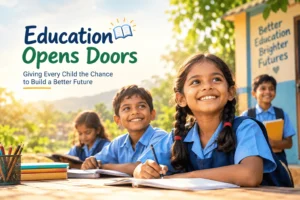
A child’s education should not be measured only by marks. Grades matter, but so do curiosity, confidence, communication, creativity and the ability to keep learning. A child should be able to discover books beyond the syllabus. They should be able to ask questions without fear. They should have opportunities to meet people who inspire them. They should be able to experiment, make mistakes and try again. They should have opportunities to discover interests that may eventually shape their future. Because education is not simply preparation for the next examination.
It is preparation for life.
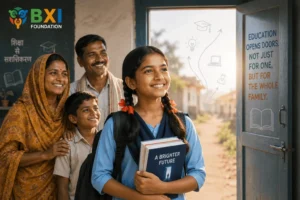
When schools, families, communities and organisations work together, children gain access to a wider world of learning. And sometimes, that additional opportunity—a book, a mentor, a computer, a conversation, a project or simply a safe place to learn—can help a child see possibilities that once seemed out of reach. Every child deserves an education that continues beyond the classroom.