Introduction
Healthcare is most effective when it reaches people where they are—not just physically, but socially and culturally. Across underserved regions, a powerful shift is happening: communities are no longer just beneficiaries of healthcare services—they are becoming active participants and leaders in improving their own well-being.
Empowering communities in healthcare is not just a strategy—it is a sustainable solution that creates long-term impact, builds trust, and ensures no one is left behind.
Why Community Empowerment Matters in Healthcare
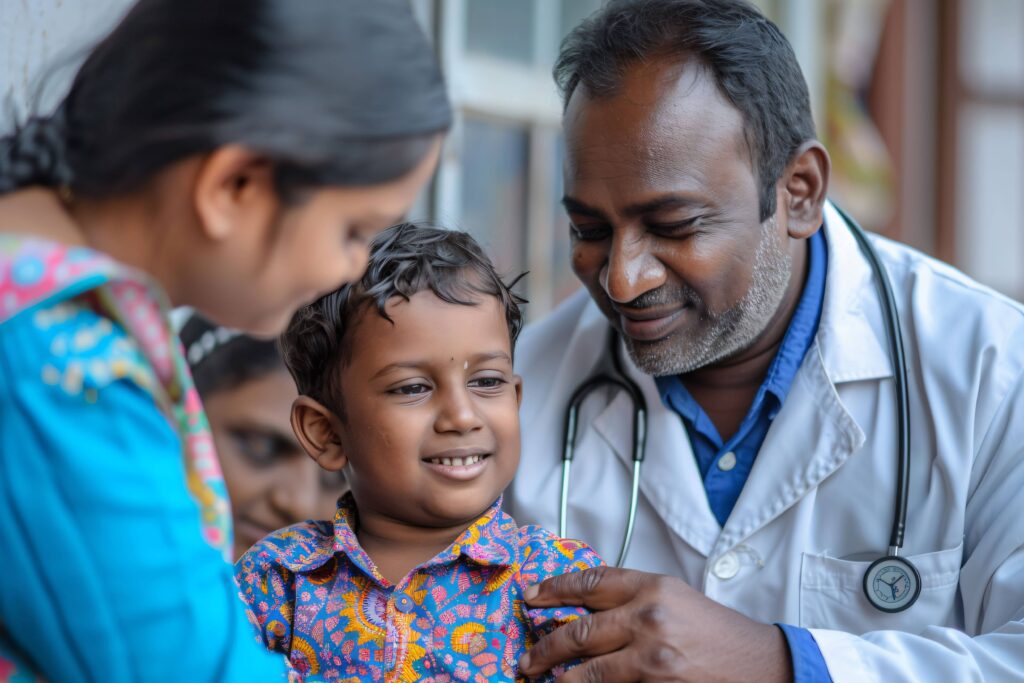
Traditional healthcare systems often struggle to reach remote and underserved populations due to distance, cost, and lack of awareness. Community empowerment addresses these challenges by shifting the focus from centralized care to localized action.
When communities are involved:
- Healthcare becomes accessible and culturally relevant
- People are more likely to trust and follow medical advice
- Preventive care improves, reducing long-term health risks
Studies show that community participation leads to better health outcomes because programs are designed around real needs rather than assumptions.
The Role of Community Health Workers (CHWs)
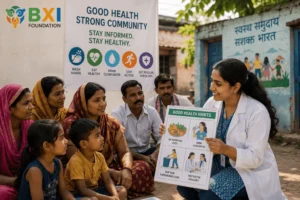
At the heart of community empowerment are Community Health Workers (CHWs)—local individuals trained to provide basic healthcare support and awareness.
They:
- Act as a bridge between hospitals and communities
- Educate families on hygiene, nutrition, and disease prevention
- Support maternal and child health services
- Help in early diagnosis and referrals
In India, CHWs like ASHA workers, ANMs, and Anganwadi workers form the backbone of grassroots healthcare systems, ensuring last-mile delivery of servicess
From Awareness to Action: Building Health Literacy
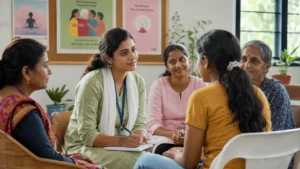
Empowered communities are informed communities. One of the most impactful ways to improve healthcare outcomes is through health education and awareness.
Key focus areas include:
- Hygiene and sanitation practices
- Nutrition and balanced diets
- Preventive healthcare and regular check-ups
- Early signs of common diseases
When people understand their health, they make better decisions—reducing dependency on emergency care and improving overall quality of life.
Leveraging Technology for Community Health
Technology is becoming a powerful tool in empowering communities:
- Telemedicine connects remote patients with doctors
- Mobile health units bring services to villages
- Digital tools help CHWs track patient data and improve care delivery
These innovations are bridging healthcare gaps and making services more scalable and efficient, especially in low-resource settings.
Community Participation: The Key to Sustainability
Empowerment goes beyond providing services—it involves ownership.
When communities:
- Participate in planning healthcare programs
- Volunteer in awareness drives
- Support local health initiatives
…the impact becomes long-lasting. Community-driven healthcare models are more sustainable because they continue even after external support reduces.
Conclusion
Empowering communities is not just about improving healthcare—it’s about transforming lives. When people are given the knowledge, tools, and confidence to take charge of their health, the results are powerful and lasting.
At BXI Foundation, this belief drives every initiative—because real change begins within the community itself.