Introduction
Healthcare doesn’t improve with treatment alone—it improves when communities become part of the solution.
In our previous efforts, we explored critical areas like improving healthcare access, promoting healthy habits, identifying health issues among students, and addressing malnutrition. These initiatives highlighted an important truth: real, lasting change happens when people are actively involved in their own well-being.
This is where community-led healthcare becomes essential.
From Availability to Accountability: The Shift Toward Community-Owned Healthcare
Improving access to healthcare is the first step—but it’s not enough.
Many communities still face:
- Irregular follow-ups after treatment
- Lack of awareness about preventive care
- Dependence on external support
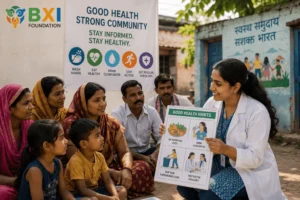
Community-led healthcare shifts this dynamic. It encourages people to:
- Take ownership of their health decisions
- Support each other through local networks
- Participate in health programs and awareness drives
This transition from access to ownership ensures long-term impact.
Why Community Involvement Works
Our work in schools and communities has shown that awareness alone does not guarantee change. For example:
- Students identified with health issues need continuous guidance
- Nutrition programs succeed only when families are involved
- Preventive care works best when practiced collectively
When communities are involved:
- Health practices become part of daily life
- Information spreads faster through trusted local voices
- People feel responsible, not dependent
Prevention Becomes a Way of Life
One of the biggest advantages of empowering communities is the shift toward preventive healthcare.
Instead of reacting to illness, communities begin to:
- Practice hygiene and sanitation daily
- Focus on balanced nutrition
- Encourage regular health check-ups
- Identify early warning signs of diseases
This reduces:
- Healthcare costs
- Severe health conditions
- Pressure on medical systems
Strengthening Healthcare Through Collaboration
Community empowerment does not replace healthcare systems—it strengthens them.
When communities collaborate with:
- NGOs and foundations
- Healthcare professionals
- Government programs
…the result is a more inclusive and effective system.
Each stakeholder plays a role, but the community becomes the foundation of sustainability.
Challenges We Must Overcome
While community-led healthcare is powerful, it comes with challenges:
- Deep-rooted myths and misinformation
- Limited resources in rural areas
- Need for continuous engagement
- Training and support for local volunteers
Addressing these challenges requires patience, consistency, and trust-building.
The Way Forward: Healthcare That Starts Within
The future of healthcare lies not just in hospitals or policies—but in people.
By empowering communities, we can:
- Create awareness that leads to action
- Build habits that prevent diseases
- Develop systems that sustain themselves
Because when communities are empowered, healthcare is no longer a service—it becomes a shared responsibility.
Conclusion
The journey from healthcare access to awareness, and now to community empowerment, reflects a deeper mission: creating lasting change from within. At BXI Foundation, every step forward is guided by this belief—that empowered communities are the key to healthier, stronger, and more resilient societies.